
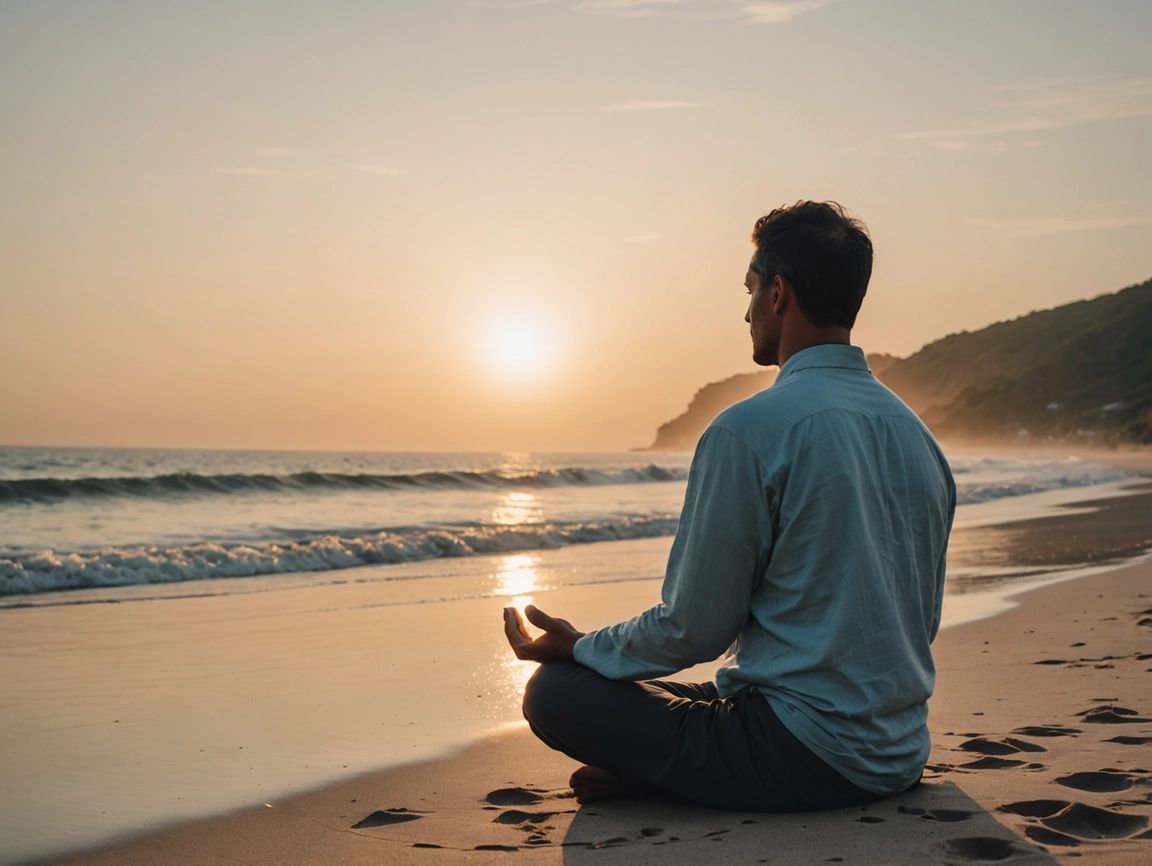
Meditation is one of the most powerful practices for improving your mental clarity, emotional balance, focus, health, and overall well-being. But even though the benefits are widely known, many people struggle to make it a consistent part of daily life.
The good news? Meditation becomes effortless once you learn how to integrate it into your routine in simple, practical, and enjoyable ways. You don’t need to meditate for an hour a day, sit cross-legged on a cushion, or become an expert in mindfulness. What matters most is consistency—and consistency becomes easy when meditation fits naturally into your lifestyle.
Here are 10 simple ways to turn meditation into a daily habit for life, even if you’ve struggled before.
- Start With Just One Minute a Day
Most people never build the meditation habit because they start with unrealistic expectations: 20–30 minutes, deep silence, perfect focus, and no distractions.
Here’s the truth:
Meditation doesn’t need to be long to be effective.
Start with one minute. Yes—just one.
A single minute of intentional breathing and awareness each day:
- Builds the habit without resistance
- Helps your mind associate meditation with ease
- Eliminates guilt, pressure, and perfectionism
If one minute feels effortless, you’ll naturally want to increase it over time.
- Choose a Consistent Time (Habit Stacking Works Best)
Meditation becomes automatic when it is attached to something you already do.
This technique—called habit stacking—is one of the most effective for long-term behavior change.
Try pairing meditation with:
- After brushing your teeth
- Before making your morning coffee
- As soon as you sit at your desk
- Before bed
- Right after your daily shower
Your brain loves routine. When meditation becomes part of an existing sequence, you no longer have to “remember” to meditate—your body does it for you.
- Create a Dedicated Meditation Space
Your environment influences your behavior. When you create a space designed for calmness and focus, your mind will naturally settle every time you enter it.
This space doesn’t need to be elaborate. A small corner with:
- A pillow or comfortable chair
- Soft lighting
- A candle or incense
- Plants or minimal décor
…is enough to help your mind shift into meditation mode.
A dedicated space creates a psychological anchor that says:
“This is where I show up for myself.”
- Use Guided Meditations (Especially When You’re Busy)
Guided meditations eliminate the struggle of “doing it right.”
They’re perfect for beginners or busy individuals because they:
- Reduce overthinking
- Keep you focused
- Make meditation feel supportive, not stressful
- Provide structure and emotional grounding
You can find guided meditations on apps like Insight Timer, Calm, Headspace, YouTube, or even through AI-powered recordings.
Choose short ones when needed—3 to 10 minutes is enough to change your day.
- Focus on Your Breath (The Most Powerful Anchor)
Breathing is the foundation of all meditation practices. When in doubt, return to your breath.
Try these simple techniques:
- Box breathing: Inhale 4, hold 4, exhale 4, hold 4
- 4-7-8 breathing: Inhale 4, hold 7, exhale 8
- Equal breathing: Inhale 5, exhale 5
- Slow, intentional breaths: Breathe in calm… breathe out stress
Your breath brings you back to the present moment—and the present is where your power is.
- Make Meditation Part of Your Self-Care Ritual
When meditation becomes associated with comfort and enjoyment, your brain begins to crave it.
Try pairing meditation with:
- A warm tea
- Essential oils
- Cozy blankets
- Soft or calming music
- A warm bath before or after
Make it a moment you look forward to instead of a task you “have to do.”
- Remove the Pressure to Be Perfect
Many people quit meditation because they believe they’re not “doing it right.”
Thoughts will come.
Your mind will wander.
Some days will feel deeper than others.
This is normal.
The goal of meditation isn’t to have no thoughts.
The goal is to observe your thoughts without attaching to them.
Progress in meditation is measured by awareness—not silence.
Give yourself permission to be messy, human, and imperfect.
- Track Your Streak (Small Wins Build Motivation)
Humans love progress—especially when we see it visually.
Use a:
- Habit tracker app
- Calendar
- Journal
- Bullet journal grid
- Digital planner
Every time you check off a meditation session, you reinforce the identity of someone who meditates daily.
Tracking also reveals patterns. You’ll notice how much calmer, clearer, and more grounded your days feel when meditation starts becoming second nature.
- Mix Up Your Meditation Style to Keep It Fresh
Meditation is not one-size-fits-all. Explore different types to find what engages you most:
- Breathwork
- Visualization
- Body scan
- Affirmation meditation
- Mindfulness meditation
- Loving-kindness meditation
- Walking meditation
- Sound bath or music meditation
- Chakra or energy-based practices
When meditation stays interesting, consistency becomes far easier.
- Connect Meditation to a Bigger “Why”
Lasting habits come from emotional meaning, not willpower.
Ask yourself:
- Why do I want to meditate daily?
- What do I hope to feel, change, or experience?
- Who will I become by making meditation a lifelong habit?
Maybe your “why” is:
- Better emotional stability
- Improved health
- Less anxiety
- Greater focus
- Spiritual connection
- A calmer presence for your children
- Feeling more like your true self
Write your “why” somewhere visible.
Remind yourself of it daily.
Your “why” becomes your anchor on days when motivation is low.
Final Thoughts: Meditation Becomes Life-Changing When It Becomes Daily
You don’t need discipline—you need simple systems.
You don’t need an hour—you need one minute to start.
You don’t need silence—you need presence.
By starting small, creating space, exploring different methods, and making meditation enjoyable, it becomes an effortless daily ritual that supports you for life.
Meditation isn’t just something you do.
It becomes who you are.